From fragmented libraries to a shared foundation
As IXL's product ecosystem grew, so did the complexity of maintaining consistency across teams. Multiple design libraries had emerged over time, each evolving independently to support different product areas. Components were difficult to find, patterns were duplicated across libraries, accessibility standards varied, and design decisions rarely extended into engineering.
Several efforts had been made to improve the system, but without dedicated ownership, clear goals, or sustained momentum, progress often stalled as priorities shifted.
When the designer leading the broader design library effort left the company, my director asked me to step in. Building on credibility from earlier design systems work, including a color palette initiative for the Content team, I took responsibility for driving the effort forward.
My goal wasn't simply to improve the libraries themselves. It was to create the standards, processes, and cross-functional alignment needed for design systems work to scale across the organization.
Coordinating across libraries while continuing to own one directly
As design system lead, I coordinated design library efforts across eight library owners and eleven libraries while continuing to own the Quizzes library directly.
My responsibilities included:
- Defining shared standards and governance
- Facilitating alignment across library owners
- Identifying and resolving system-wide gaps
- Driving adoption of new design system practices
- Initiating and leading design-engineering collaboration around tokens and implementation
Unlike many design system teams, this work was not supported by dedicated headcount. Progress depended on building consensus, maintaining momentum, and creating accountability across designers balancing competing product priorities.
Creating a common foundation across eleven libraries
One of the first challenges was the lack of consistency across libraries. Although teams generally followed atomic design principles, there was no shared structure, naming convention, or template. Similar patterns were often organized differently from one library to another, making assets difficult to discover and maintain.
I led the effort to establish common standards across all libraries, including:
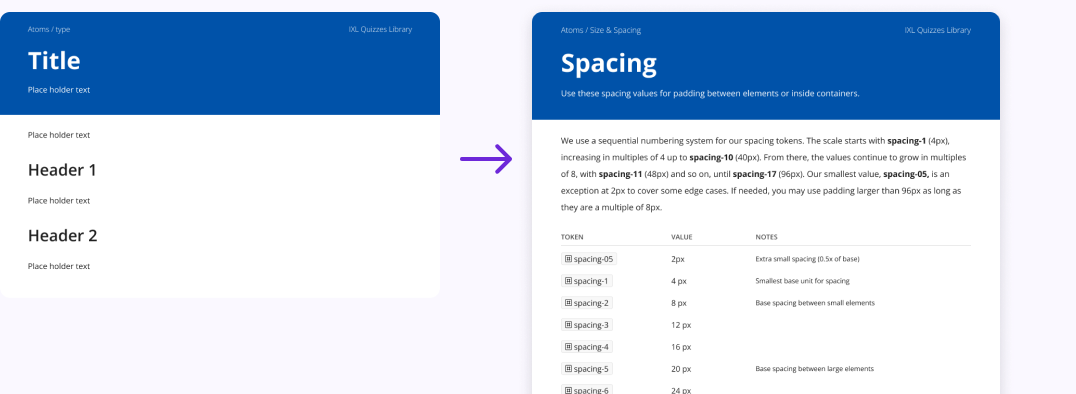
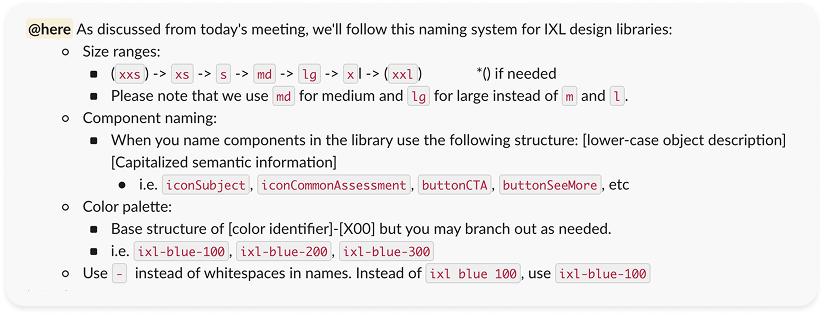
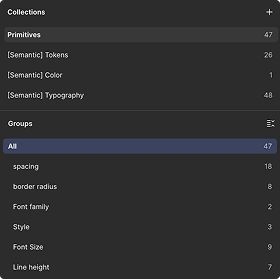
I worked closely with each library owner to gather feedback, refine proposals, and drive adoption across the team. The result was a common foundation that allowed designers to navigate and contribute across libraries more easily, regardless of product area.
Building processes that would survive shifting priorities
The biggest challenge wasn't defining standards. It was ensuring they would survive.
Historically, design system work at IXL tended to gain momentum and then stall as priorities shifted. Without clear ownership or accountability, even valuable improvements often struggled to gain traction.
To address this, I established recurring design library syncs, created clearer ownership expectations, and introduced processes that made progress visible across the team.
One example was the introduction of a dedicated 'To Be Added' area within each library. Designers could propose reusable patterns without directly modifying shared assets, while library owners retained responsibility for review and publication.
This created a low-friction contribution model that encouraged participation while maintaining quality and consistency.
Driving improvements in areas I didn't directly own
Some of the most impactful improvements happened in areas I didn't directly own.
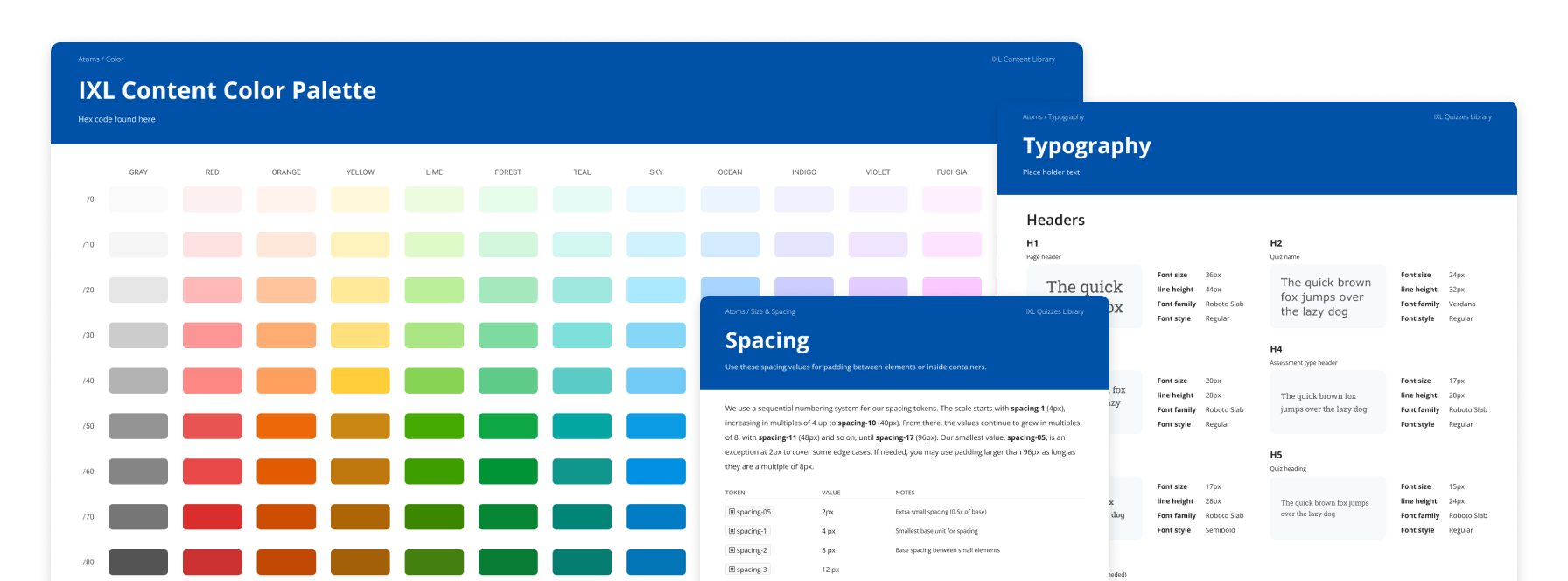
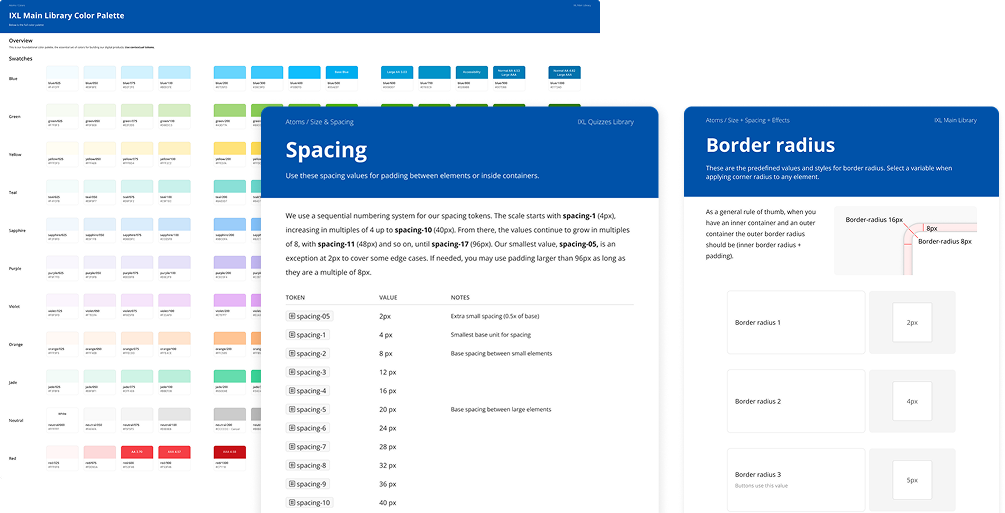
While working with the owners of IXL's central library, I noticed a lack of underlying standards for spacing, corner radius, and other foundational design decisions. Designers regularly used slightly different values across projects, creating small inconsistencies that accumulated over time.
I developed a proposal for a shared spacing and sizing system, facilitated discussion across stakeholders, incorporated feedback, and helped drive adoption.
The resulting system established a common foundation for spacing and sizing decisions while remaining flexible enough to accommodate exceptions when needed.
I also advocated for accessibility improvements within the central library, helping ensure color and typography standards better supported accessibility requirements across the product.
Connecting design system work with engineering implementation
Historically, IXL's design libraries existed almost entirely within Figma. Design decisions were documented in design files, but there was no shared system of tokens or reusable implementation patterns in code. As a result, design and engineering often lacked a common language.
After helping establish foundational design tokens, I saw an opportunity to extend the system beyond design.
I initiated conversations with product and engineering stakeholders, aligned on the value of implementation, and helped establish a phased roadmap for bringing design tokens into code. The first phase focused on foundational tokens such as color and spacing. Subsequent phases expanded toward reusable UI components and shared implementation patterns.
While the work is still ongoing, this represented the first sustained effort to connect IXL's design system work with engineering implementation.
A shared foundation with lasting organizational effect
Design systems are organizational challenges first
Design systems are ultimately organizational challenges. The hardest problems were rarely about components or tooling. They were about ownership, alignment, and creating sustainable momentum in an environment where everyone already had competing priorities.
I learned that successful systems require more than standards. They require clear governance, accountability, and processes that make the right behavior easy to sustain over time.
Perhaps the most important lesson was that influence doesn't require ownership. Some of the most meaningful changes came from identifying gaps, building alignment, and helping teams move toward a better solution, even when I wasn't the primary owner.